




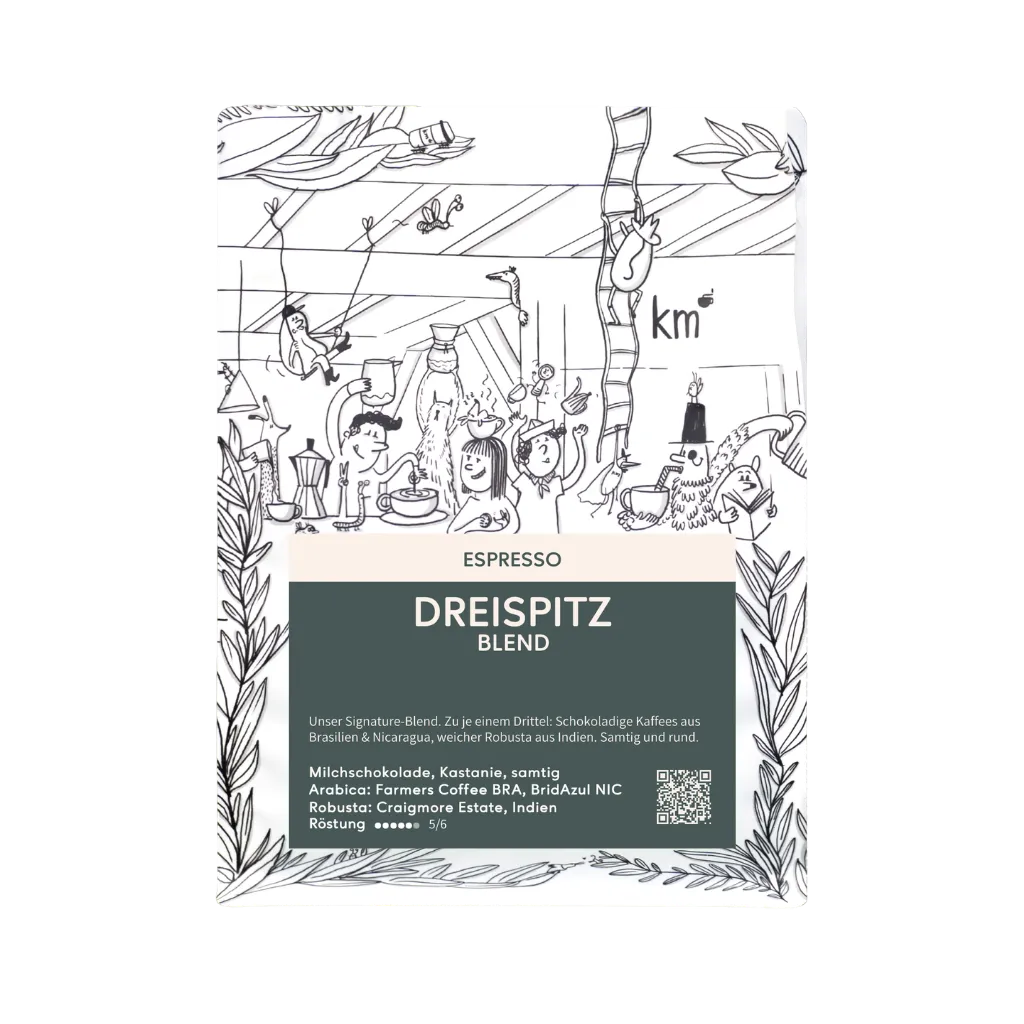

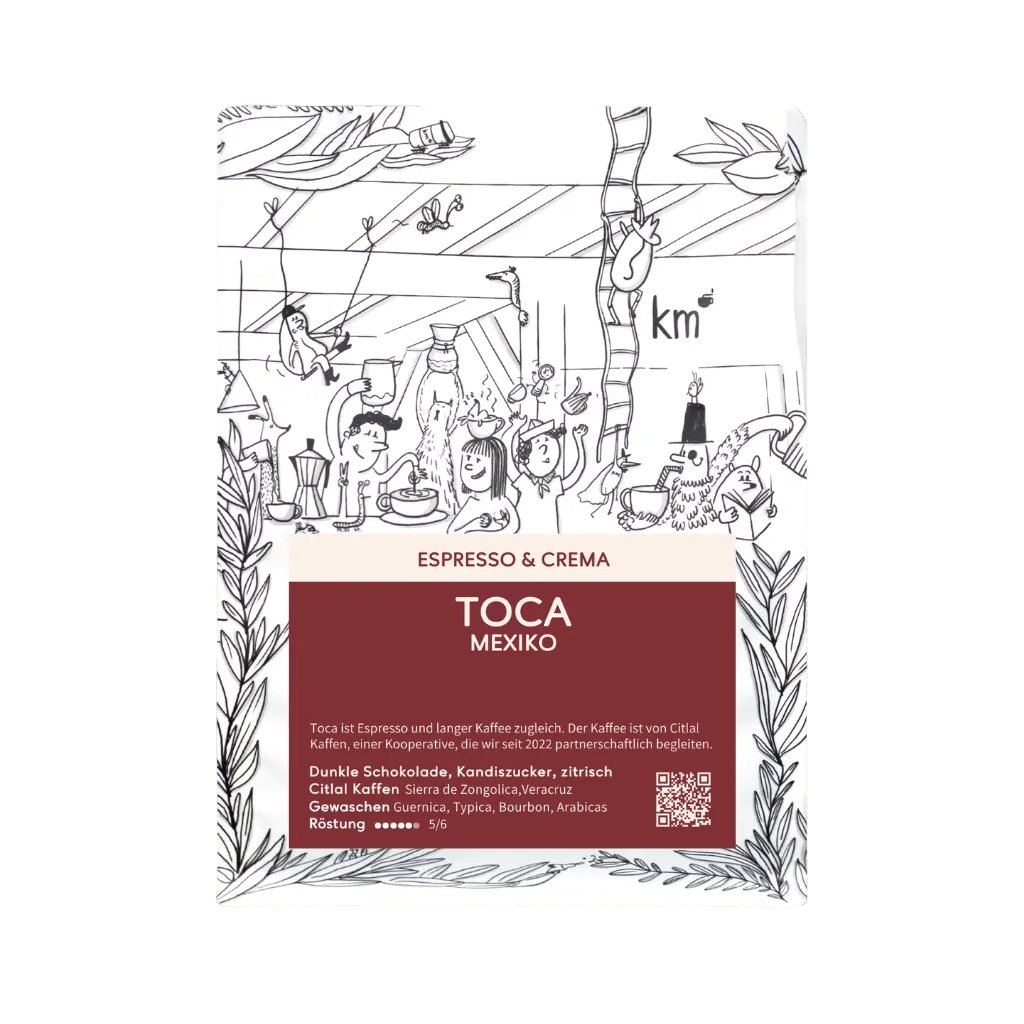

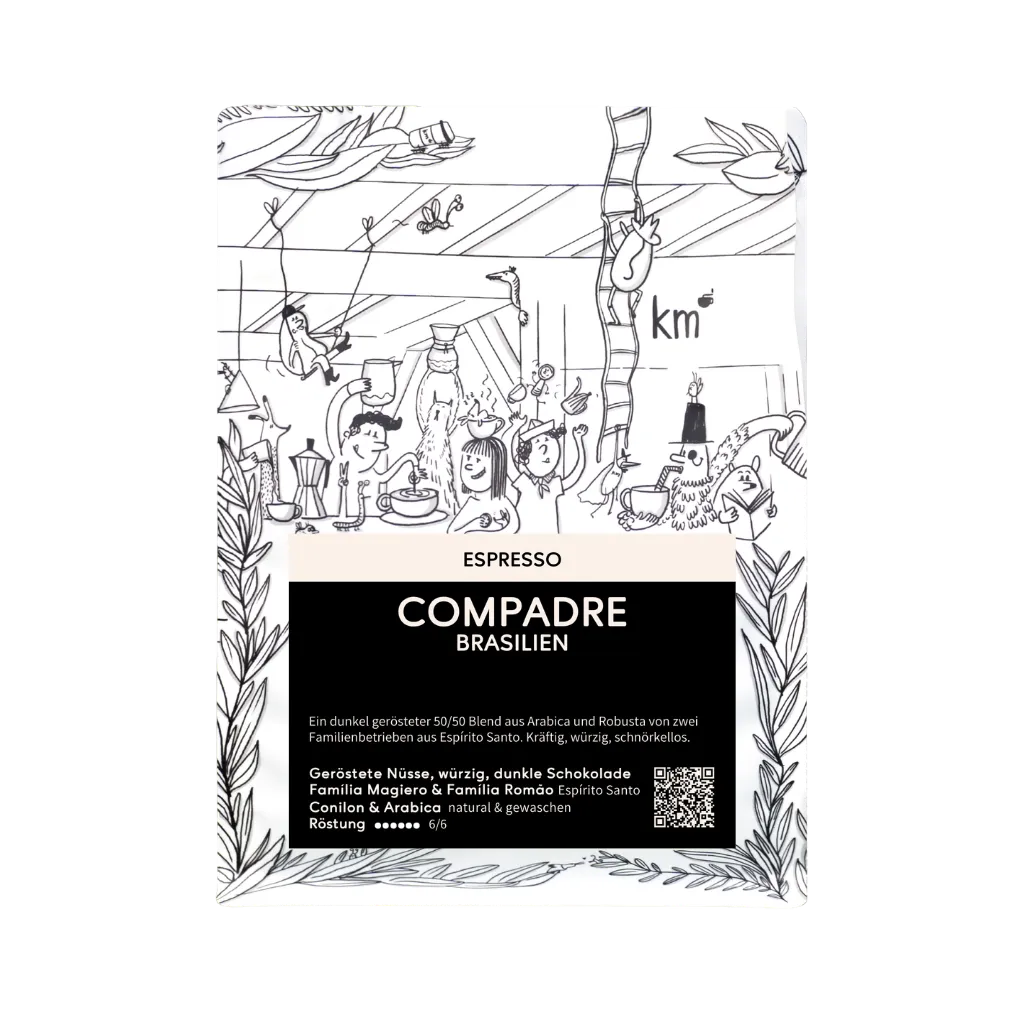








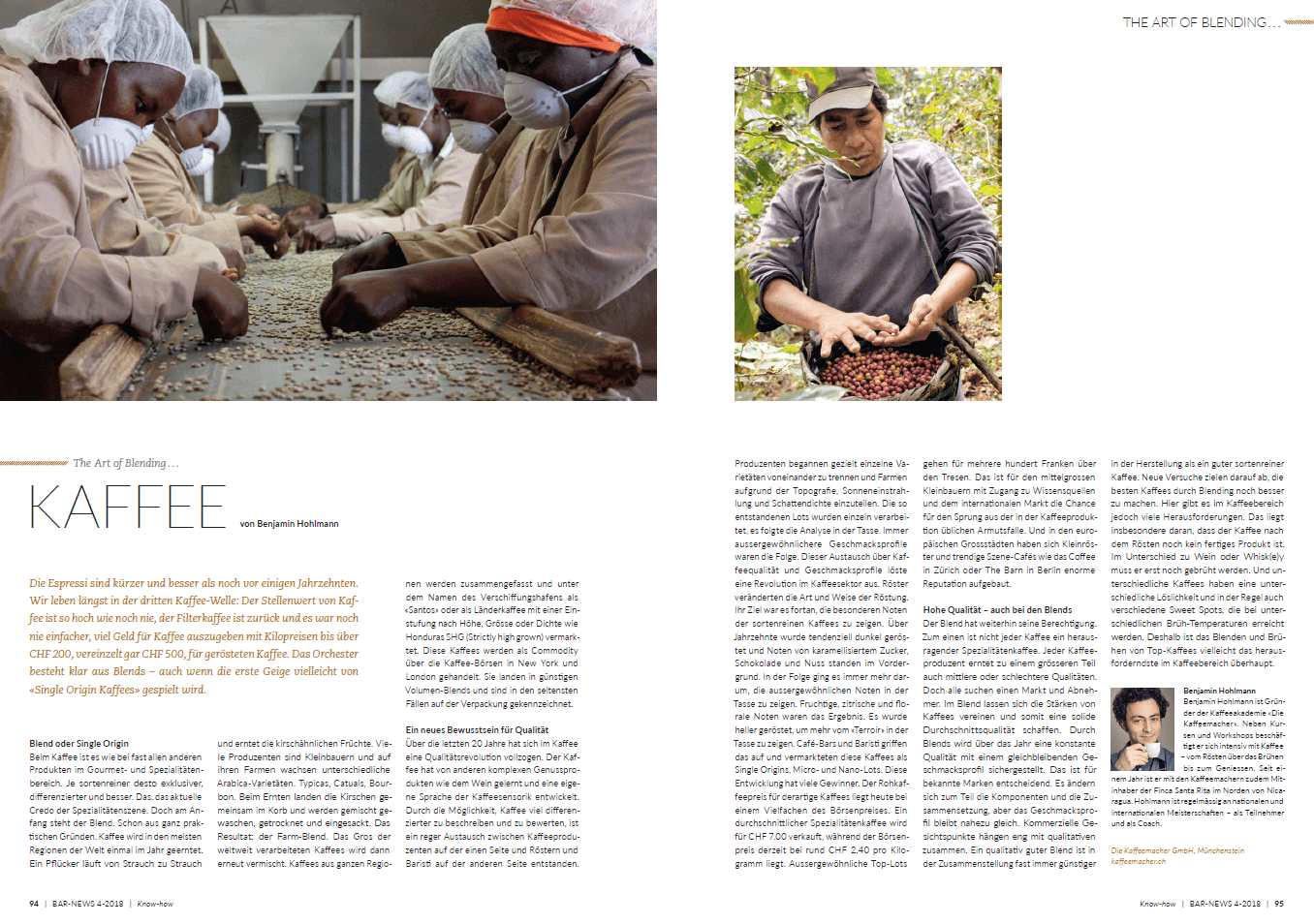

A coffee article written by us has appeared in the current Bar News. It covers the topic of blending whiskey and other specialty products like cigars, perfume, and, of course, coffee.
Some excerpts are below. And here is the entire article as a PDF.
When it comes to coffee, it is just like almost all other products in the gourmet and specialty sector. The more single-origin it is, the more exclusive, sophisticated, and better—that is the current credo of the specialty scene.
But it starts with the blend. For very practical reasons alone. Coffee is the dried seed of a cherry-like fruit and grows on shrub-like trees. In most regions of the world, it is harvested once a year. A picker walks from shrub to shrub harvesting the coffee. Many producers are smallholders, and different Arabica varieties grow on their farms. Typicas, Catuaís, Bourbon. During the harvest, the cherries end up in the basket together and are washed, dried, and bagged as a mixture. The farm blend is born.
Coffee Quality Offensive
Over the last 20 years, a quality revolution has taken place in the coffee industry. Coffee has learned from other complex indulgence products like wine and developed its own language of coffee sensory analysis. Through the ability to describe and evaluate coffee in a much more nuanced way, a lively exchange has emerged between coffee producers on one side and roasters and baristas on the other. Producers began to specifically separate individual varieties from one another and classify farms based on topography, sunlight exposure, and shade density. The lots created in this way were processed separately, followed by analysis in the cup. Increasingly extraordinary flavor profiles emerged.
This exchange about coffee quality and flavor profiles triggered a revolution in the coffee sector. Roasters changed the way they approach roasting. Their goal from then on was to showcase the special notes of single-origin coffees. For decades, the tendency was to roast dark, with roasted notes of caramelized sugars, chocolate, and nuts taking center stage. Subsequently, it became more and more about showcasing the extraordinary notes in the cup. Fruity, citrusy, and floral notes were the result. Roasting became lighter to reveal more of the “terroir” in the cup. Café bars and baristas picked up on this and marketed these coffees as single origins, micro-lots, and nano-lots.
New Developments in Coffee Blending
The latest attempts aim to make the best coffees even better through blending. However, there are many challenges in the coffee sector here. This is particularly due to the fact that, after roasting, coffee is not yet a finished product like wine or whiskey. It still needs to be brewed. And different coffees have different solubility and, as a rule, also different sweet spots. Therefore, blending and brewing top-quality coffees is perhaps the most challenging task in the entire coffee sector.


